
Z – Moving Beyond the Left
In the collective aims and desires for a free world, does the construct of the “Left” hinder more than help?
One answer is: Yes, and by design.
In a time of ideological confusion, growing authoritarianism, and cascading ecological collapse, the cyclical failures of Left frameworks, traditions, and spaces to address these concerns have left many confused, heartbroken, and jaded—and yet the stakes remain high.
While Leftist tendencies in the modern era have served as vessels for poor and working-class individuals to respond to exploitation and domination, the “organized Left” and the many “revolutionary” lifestylists who associate themselves with it have largely opted for moral judgment and social destruction. They struggle to envision, articulate, and popularize visions for better systems that render obsolete the reactive acts of protest they praise: from Aaron Bushnell’s self-immolation in front of the Israeli Embassy in Washington, D.C. to protest genocide in Palestine, to Luigi Mangione, or anyone, allegedly murdering UnitedHealthcare CEO Brian Thompson.
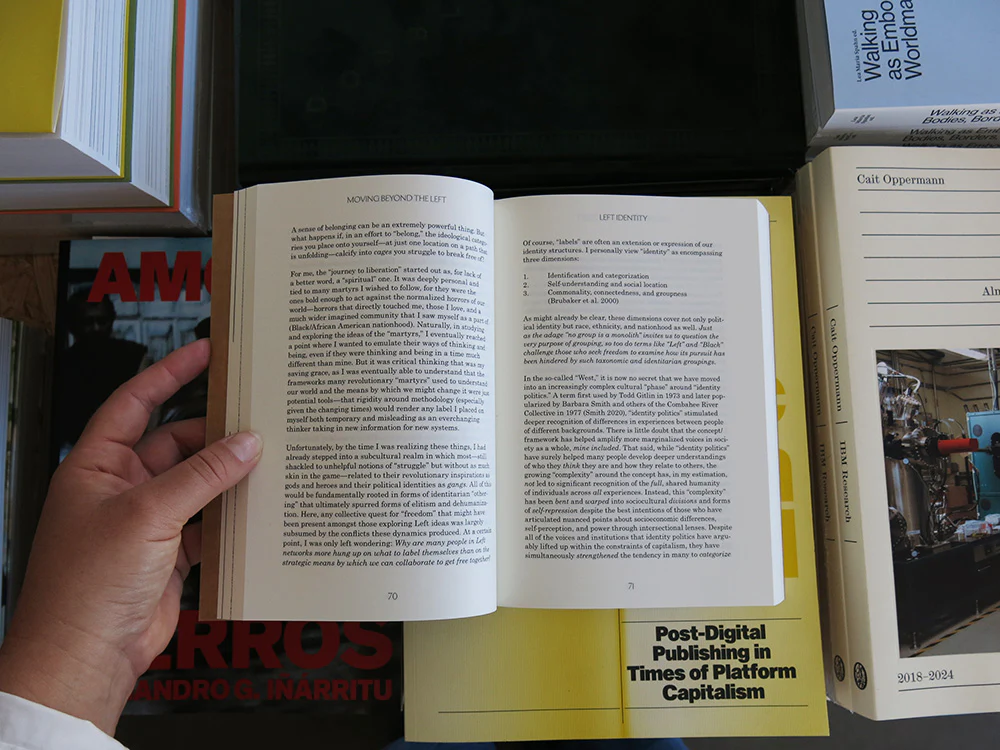
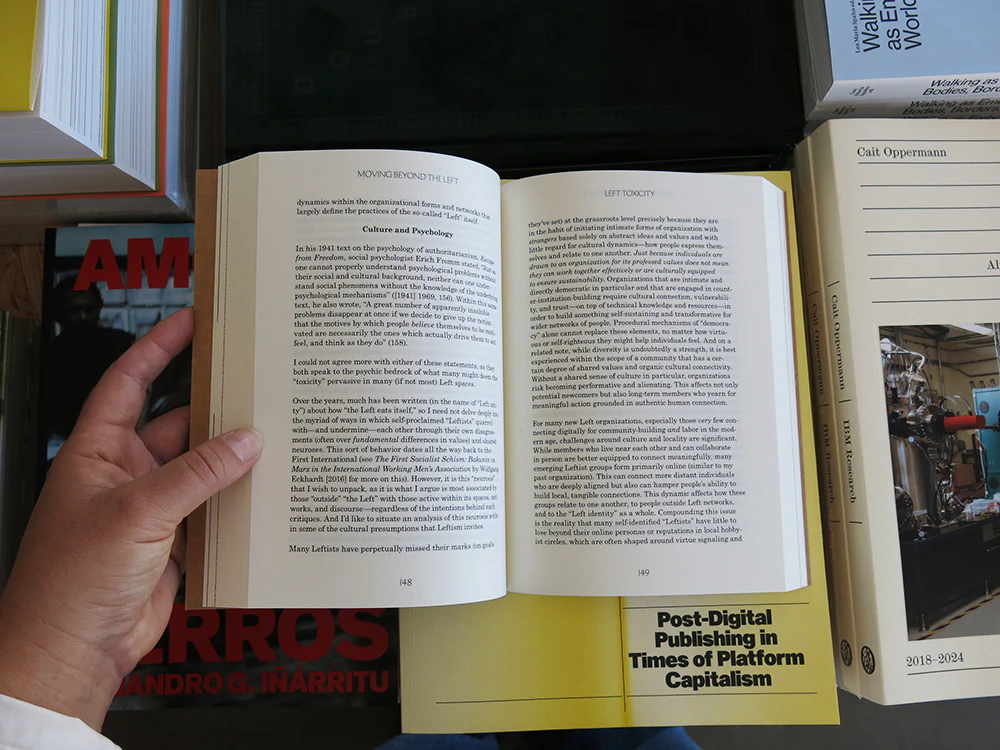
Moving Beyond the Left: A Post-Left Post-Mortem in Pursuit of Freedom unpacks and critiques the so-called “revolutionary Left” from the perspective of someone whose past work influenced millions of self-identifying revolutionary Leftists around the world and shaped the organizational efforts of thousands. Using an anti-authoritarian lens, it considers the many ways humanity’s social potentialities toward freedom are hampered by the authoritarian social logics common in most Left organizations and spaces, and by the sham of the “left–right” paradigm as a whole.
The book identifies the so-called Left’s central obstacles: categorization, identitarianism, and authoritarian conditioning. The text insists that those who prioritize freedom should imagine—and work toward—a world beyond race, gender, and other oppressive social constructs if they wish to confront the oppressive systems predicated on their existence.
Moving Beyond the Left pulls rich insights from various Left tendencies—even in critiquing common frameworks between them—and provides both perspectival and methodological suggestions for reimagining pathways to freedom.
Positing that the existential battle of humanity in this time can be boiled down to authoritarianism versus freedom, Moving Beyond the Left challenges the reader to think more deeply about the values and systems they want. It invites us to dream bigger by acknowledging differences in experiences, perspectives, and values. It encourages us to abandon forms of identitarian thinking that attempt to categorize human beings and, in the process, dehumanize us all.
More Images





Z – Moving Beyond the Left
In the collective aims and desires for a free world, does the construct of the “Left” hinder more than help?
One answer is: Yes, and by design.
In a time of ideological confusion, growing authoritarianism, and cascading ecological collapse, the cyclical failures of Left frameworks, traditions, and spaces to address these concerns have left many confused, heartbroken, and jaded—and yet the stakes remain high.
While Leftist tendencies in the modern era have served as vessels for poor and working-class individuals to respond to exploitation and domination, the “organized Left” and the many “revolutionary” lifestylists who associate themselves with it have largely opted for moral judgment and social destruction. They struggle to envision, articulate, and popularize visions for better systems that render obsolete the reactive acts of protest they praise: from Aaron Bushnell’s self-immolation in front of the Israeli Embassy in Washington, D.C. to protest genocide in Palestine, to Luigi Mangione, or anyone, allegedly murdering UnitedHealthcare CEO Brian Thompson.
Moving Beyond the Left: A Post-Left Post-Mortem in Pursuit of Freedom unpacks and critiques the so-called “revolutionary Left” from the perspective of someone whose past work influenced millions of self-identifying revolutionary Leftists around the world and shaped the organizational efforts of thousands. Using an anti-authoritarian lens, it considers the many ways humanity’s social potentialities toward freedom are hampered by the authoritarian social logics common in most Left organizations and spaces, and by the sham of the “left–right” paradigm as a whole.
The book identifies the so-called Left’s central obstacles: categorization, identitarianism, and authoritarian conditioning. The text insists that those who prioritize freedom should imagine—and work toward—a world beyond race, gender, and other oppressive social constructs if they wish to confront the oppressive systems predicated on their existence.
Moving Beyond the Left pulls rich insights from various Left tendencies—even in critiquing common frameworks between them—and provides both perspectival and methodological suggestions for reimagining pathways to freedom.
Positing that the existential battle of humanity in this time can be boiled down to authoritarianism versus freedom, Moving Beyond the Left challenges the reader to think more deeply about the values and systems they want. It invites us to dream bigger by acknowledging differences in experiences, perspectives, and values. It encourages us to abandon forms of identitarian thinking that attempt to categorize human beings and, in the process, dehumanize us all.
Product Information
Product Information
Shipping & Returns
Shipping & Returns
Description
In the collective aims and desires for a free world, does the construct of the “Left” hinder more than help?
One answer is: Yes, and by design.
In a time of ideological confusion, growing authoritarianism, and cascading ecological collapse, the cyclical failures of Left frameworks, traditions, and spaces to address these concerns have left many confused, heartbroken, and jaded—and yet the stakes remain high.
While Leftist tendencies in the modern era have served as vessels for poor and working-class individuals to respond to exploitation and domination, the “organized Left” and the many “revolutionary” lifestylists who associate themselves with it have largely opted for moral judgment and social destruction. They struggle to envision, articulate, and popularize visions for better systems that render obsolete the reactive acts of protest they praise: from Aaron Bushnell’s self-immolation in front of the Israeli Embassy in Washington, D.C. to protest genocide in Palestine, to Luigi Mangione, or anyone, allegedly murdering UnitedHealthcare CEO Brian Thompson.
Moving Beyond the Left: A Post-Left Post-Mortem in Pursuit of Freedom unpacks and critiques the so-called “revolutionary Left” from the perspective of someone whose past work influenced millions of self-identifying revolutionary Leftists around the world and shaped the organizational efforts of thousands. Using an anti-authoritarian lens, it considers the many ways humanity’s social potentialities toward freedom are hampered by the authoritarian social logics common in most Left organizations and spaces, and by the sham of the “left–right” paradigm as a whole.
The book identifies the so-called Left’s central obstacles: categorization, identitarianism, and authoritarian conditioning. The text insists that those who prioritize freedom should imagine—and work toward—a world beyond race, gender, and other oppressive social constructs if they wish to confront the oppressive systems predicated on their existence.
Moving Beyond the Left pulls rich insights from various Left tendencies—even in critiquing common frameworks between them—and provides both perspectival and methodological suggestions for reimagining pathways to freedom.
Positing that the existential battle of humanity in this time can be boiled down to authoritarianism versus freedom, Moving Beyond the Left challenges the reader to think more deeply about the values and systems they want. It invites us to dream bigger by acknowledging differences in experiences, perspectives, and values. It encourages us to abandon forms of identitarian thinking that attempt to categorize human beings and, in the process, dehumanize us all.