Takuma Nakahira – Overflow
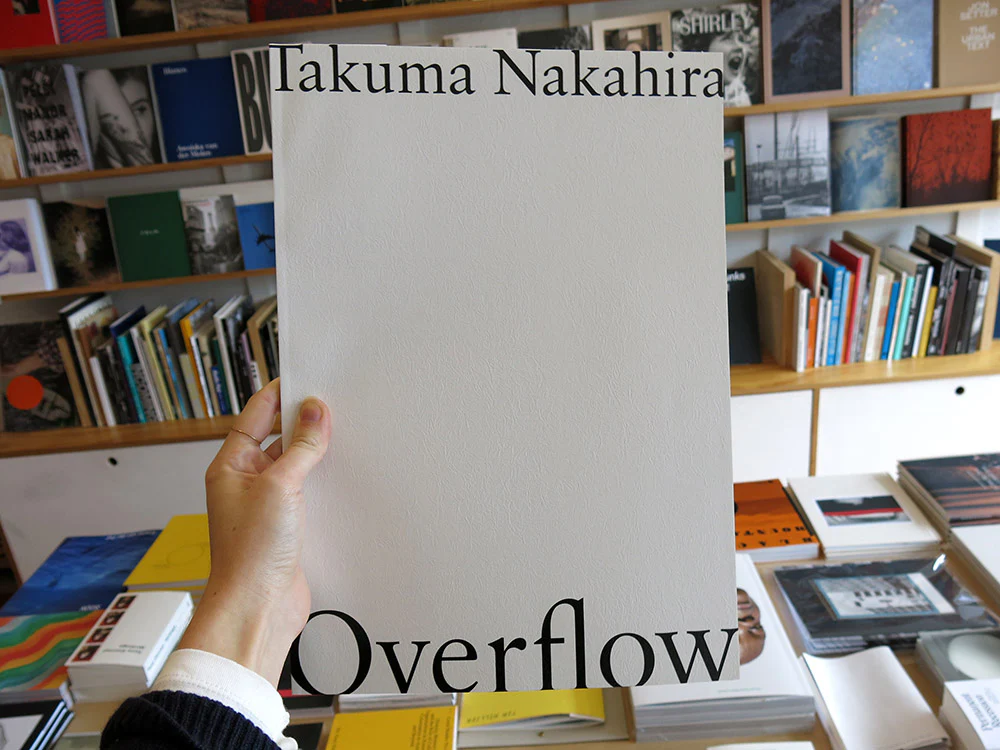
Takuma Nakahira, one of the most legendary photographers of post-war Japan and a life-long rival of Daido Moriyama. Overflow is the first photobook in which his installation work comes alive in entirety and detail since its unveiling in 1974.
Takuma Nakahira’s series ‘Overflow’ was originally presented as an installation during the 1974 exhibition ’Fifteen Photographers Today’ (National Museum of Modern Art, Tokyo). The work consisted of 48 color photographs that were arranged on a wall 6 meters wide and 1.6 meters high. The photobook Overflow is the first chance to view Nakahira’s astonishing series outside the context of an exhibition.
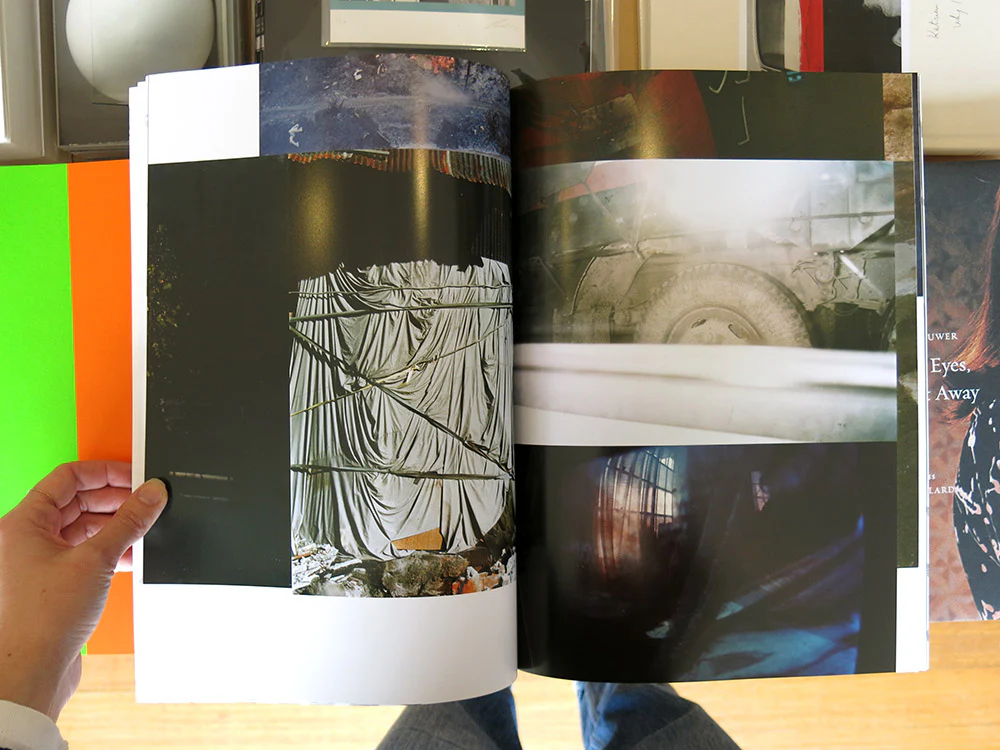
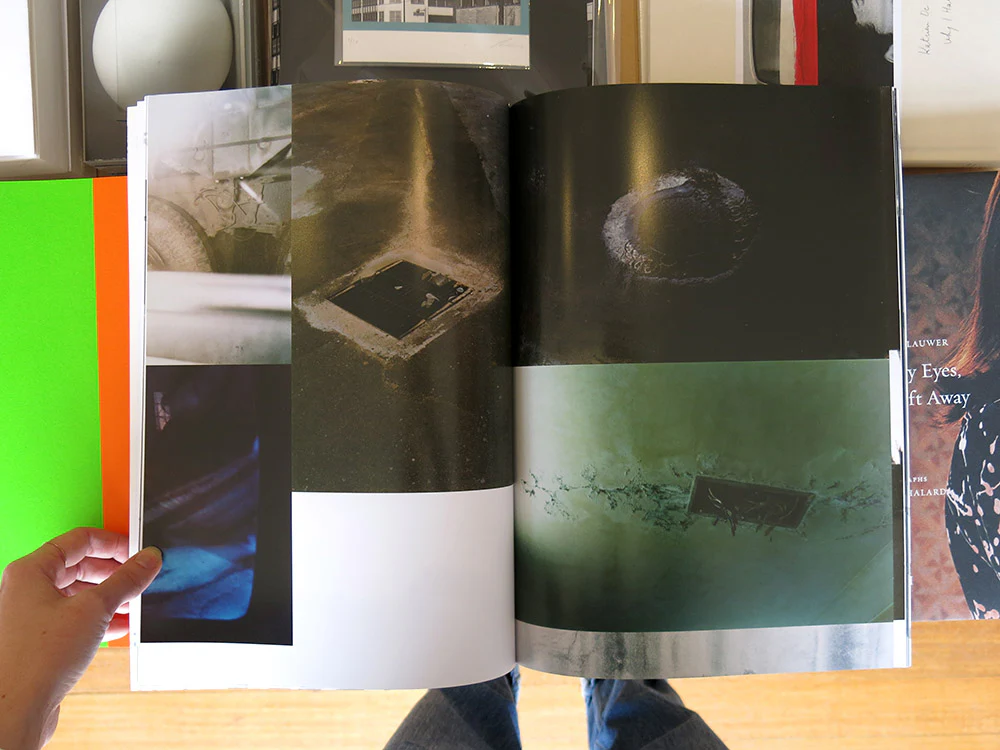
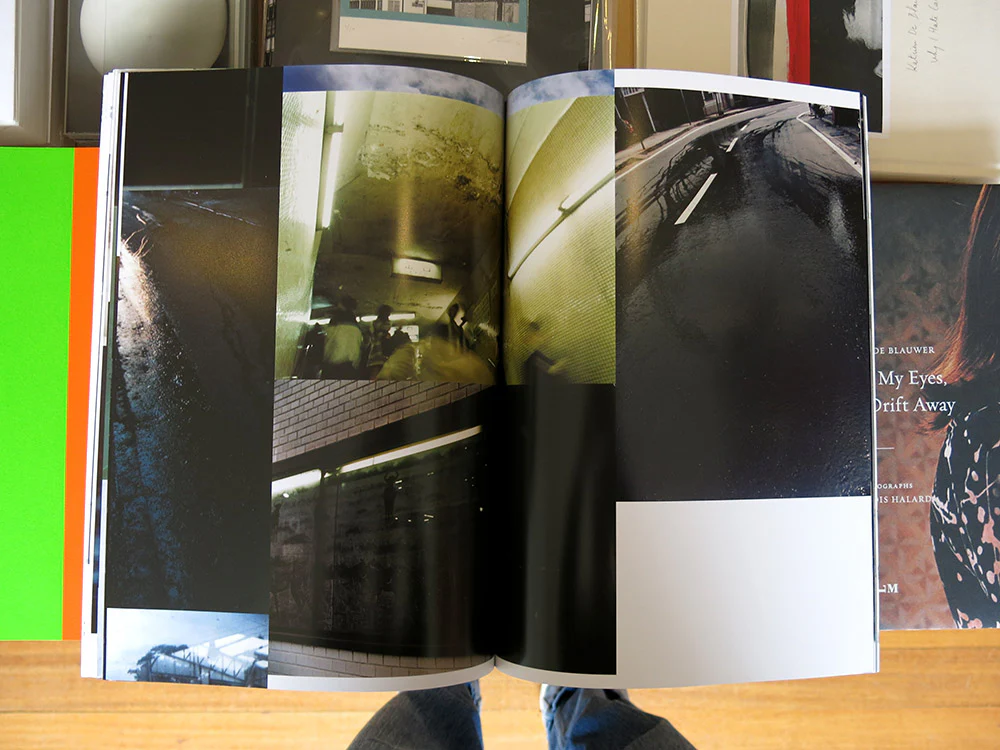
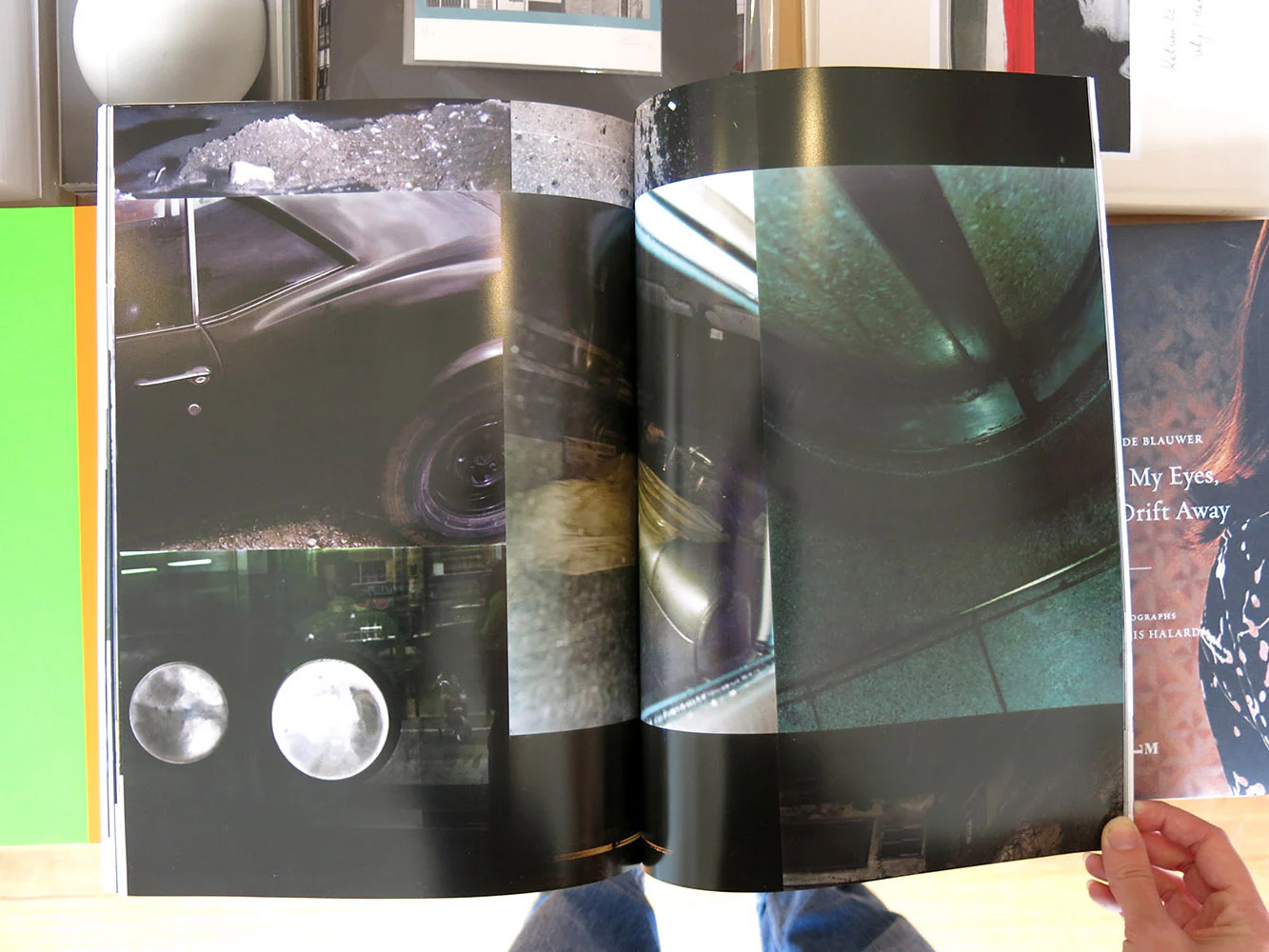
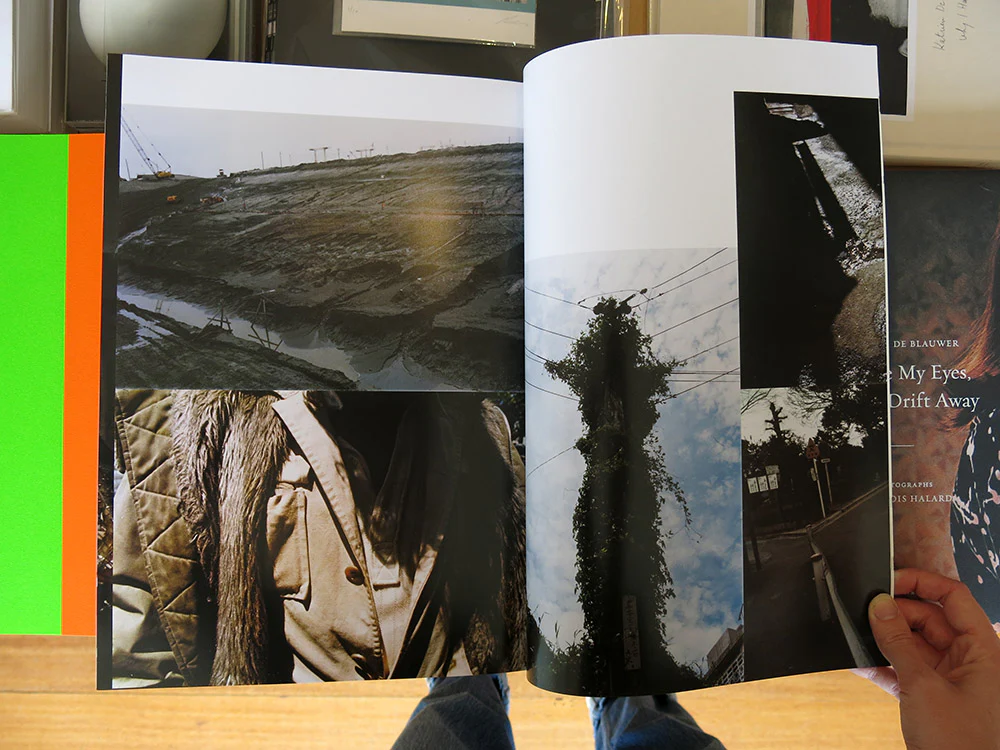
The photographs show elements of a city — eery rifts in a space overflowing with objects, commodities and information — that Nakahira encountered and captured in his everyday life, from ivy creeping across walls and manhole covers in the streets to the tire of a large truck, from a pale-bellied shark floating in the transparent darkness behind the glass of an aquarium to close-up shots of a subway station.
The photobook’s layout strictly mimics each photo’s position in the installation piece in order to replicate the series’ original experience within the confines of a book. Additionally, Princeton University assistant professor Franz K. Prichard contributes an extensive essay in which he compares the Overflow series with Nakahira’s vision of an ‘illustrated dictionary’ (as outlined in Nakahira’s 1973 essay ‘Why an Illustrated Botanical Dictionary?’), thereby offering a deep exploration of Takuma Nakahira, who integrated praxis and theory in his work like no one else.
‘Overflow compels us as viewers to see the interplay of a seemingly random distribution of fragments, surfaces and residues. And in so doing, we are made to sense the undifferentiated enumeration of parts of an incomplete whole. This is, if you recall, the definition of the “illustrated dictionary” form that Nakahira provided in the essay “Why an Illustrated Botanical Dictionary?”’
— from Franz K. Prichard’s essay
64 pages, 36.4 x 25.7 cm, softcover, Case Publishing (Tokyo).
More Images
Takuma Nakahira – Overflow
Takuma Nakahira, one of the most legendary photographers of post-war Japan and a life-long rival of Daido Moriyama. Overflow is the first photobook in which his installation work comes alive in entirety and detail since its unveiling in 1974.
Takuma Nakahira’s series ‘Overflow’ was originally presented as an installation during the 1974 exhibition ’Fifteen Photographers Today’ (National Museum of Modern Art, Tokyo). The work consisted of 48 color photographs that were arranged on a wall 6 meters wide and 1.6 meters high. The photobook Overflow is the first chance to view Nakahira’s astonishing series outside the context of an exhibition.
The photographs show elements of a city — eery rifts in a space overflowing with objects, commodities and information — that Nakahira encountered and captured in his everyday life, from ivy creeping across walls and manhole covers in the streets to the tire of a large truck, from a pale-bellied shark floating in the transparent darkness behind the glass of an aquarium to close-up shots of a subway station.
The photobook’s layout strictly mimics each photo’s position in the installation piece in order to replicate the series’ original experience within the confines of a book. Additionally, Princeton University assistant professor Franz K. Prichard contributes an extensive essay in which he compares the Overflow series with Nakahira’s vision of an ‘illustrated dictionary’ (as outlined in Nakahira’s 1973 essay ‘Why an Illustrated Botanical Dictionary?’), thereby offering a deep exploration of Takuma Nakahira, who integrated praxis and theory in his work like no one else.
‘Overflow compels us as viewers to see the interplay of a seemingly random distribution of fragments, surfaces and residues. And in so doing, we are made to sense the undifferentiated enumeration of parts of an incomplete whole. This is, if you recall, the definition of the “illustrated dictionary” form that Nakahira provided in the essay “Why an Illustrated Botanical Dictionary?”’
— from Franz K. Prichard’s essay
64 pages, 36.4 x 25.7 cm, softcover, Case Publishing (Tokyo).
Product Information
Product Information
Shipping & Returns
Shipping & Returns
Description
Takuma Nakahira, one of the most legendary photographers of post-war Japan and a life-long rival of Daido Moriyama. Overflow is the first photobook in which his installation work comes alive in entirety and detail since its unveiling in 1974.
Takuma Nakahira’s series ‘Overflow’ was originally presented as an installation during the 1974 exhibition ’Fifteen Photographers Today’ (National Museum of Modern Art, Tokyo). The work consisted of 48 color photographs that were arranged on a wall 6 meters wide and 1.6 meters high. The photobook Overflow is the first chance to view Nakahira’s astonishing series outside the context of an exhibition.
The photographs show elements of a city — eery rifts in a space overflowing with objects, commodities and information — that Nakahira encountered and captured in his everyday life, from ivy creeping across walls and manhole covers in the streets to the tire of a large truck, from a pale-bellied shark floating in the transparent darkness behind the glass of an aquarium to close-up shots of a subway station.
The photobook’s layout strictly mimics each photo’s position in the installation piece in order to replicate the series’ original experience within the confines of a book. Additionally, Princeton University assistant professor Franz K. Prichard contributes an extensive essay in which he compares the Overflow series with Nakahira’s vision of an ‘illustrated dictionary’ (as outlined in Nakahira’s 1973 essay ‘Why an Illustrated Botanical Dictionary?’), thereby offering a deep exploration of Takuma Nakahira, who integrated praxis and theory in his work like no one else.
‘Overflow compels us as viewers to see the interplay of a seemingly random distribution of fragments, surfaces and residues. And in so doing, we are made to sense the undifferentiated enumeration of parts of an incomplete whole. This is, if you recall, the definition of the “illustrated dictionary” form that Nakahira provided in the essay “Why an Illustrated Botanical Dictionary?”’
— from Franz K. Prichard’s essay
64 pages, 36.4 x 25.7 cm, softcover, Case Publishing (Tokyo).