🎉 Up to 70% Off Selected ItemsShop Sale
Renée Green – Camino Road
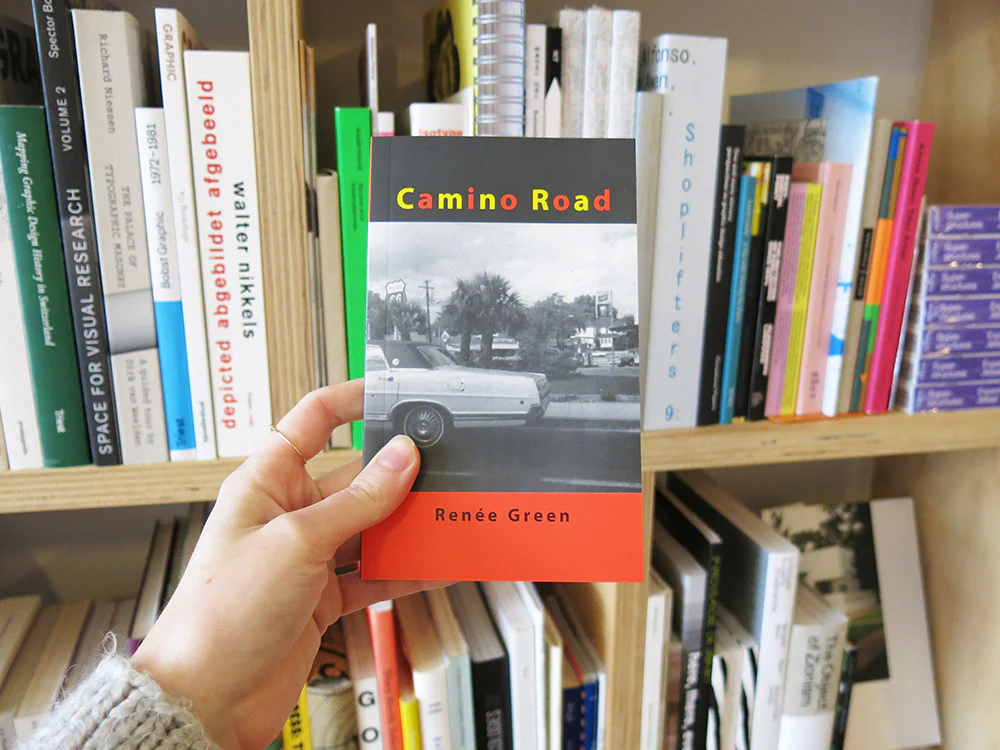
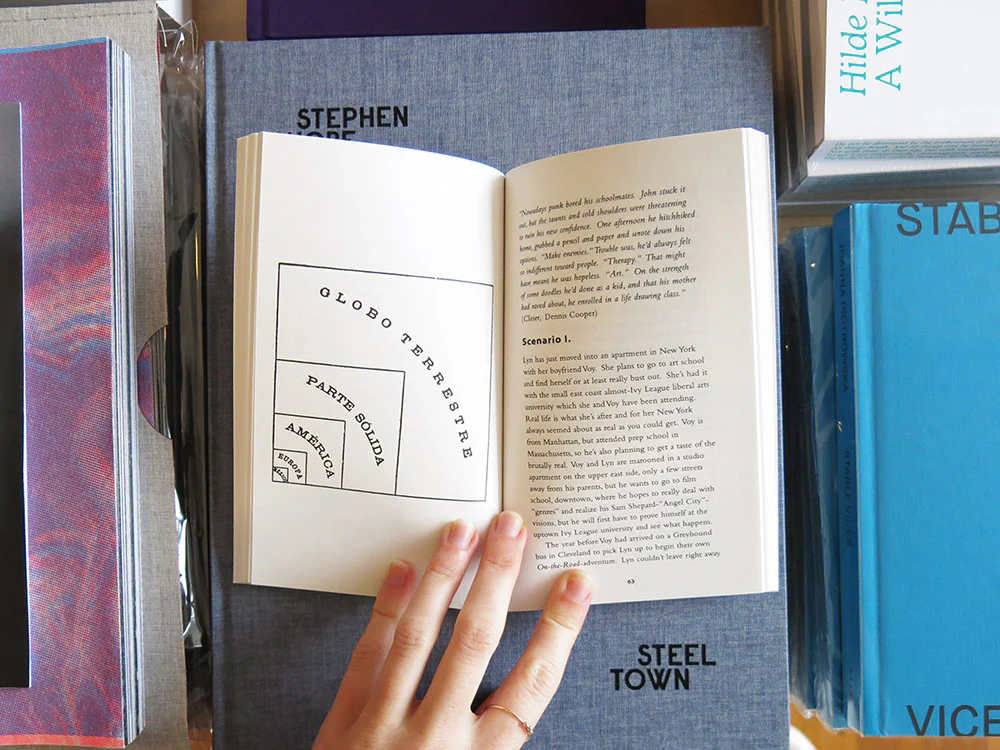
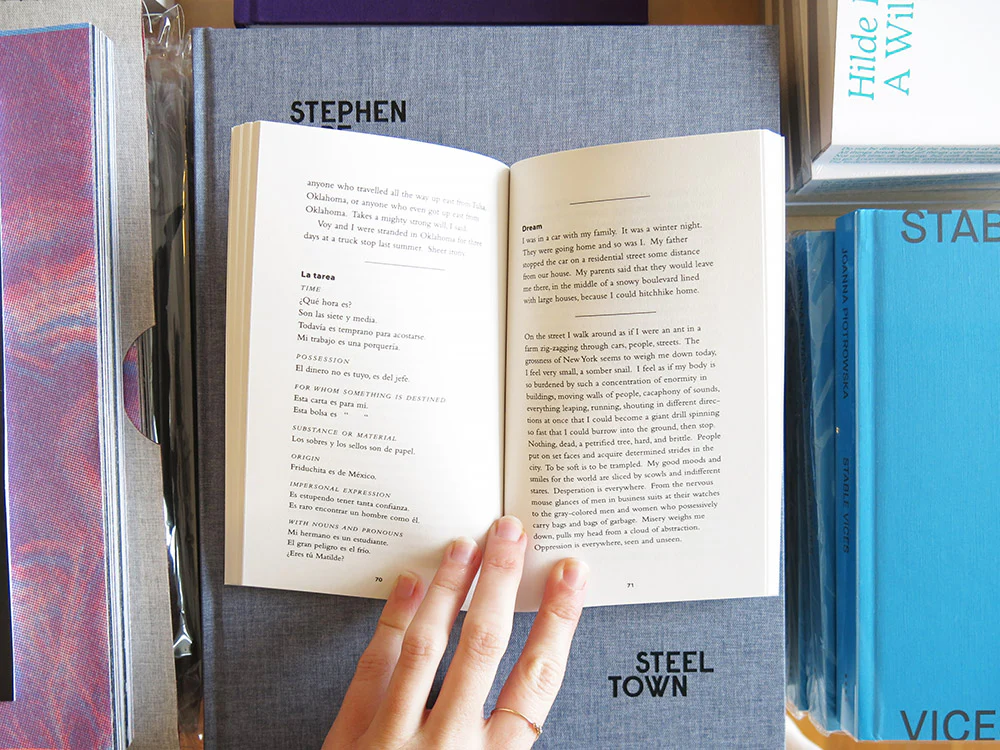
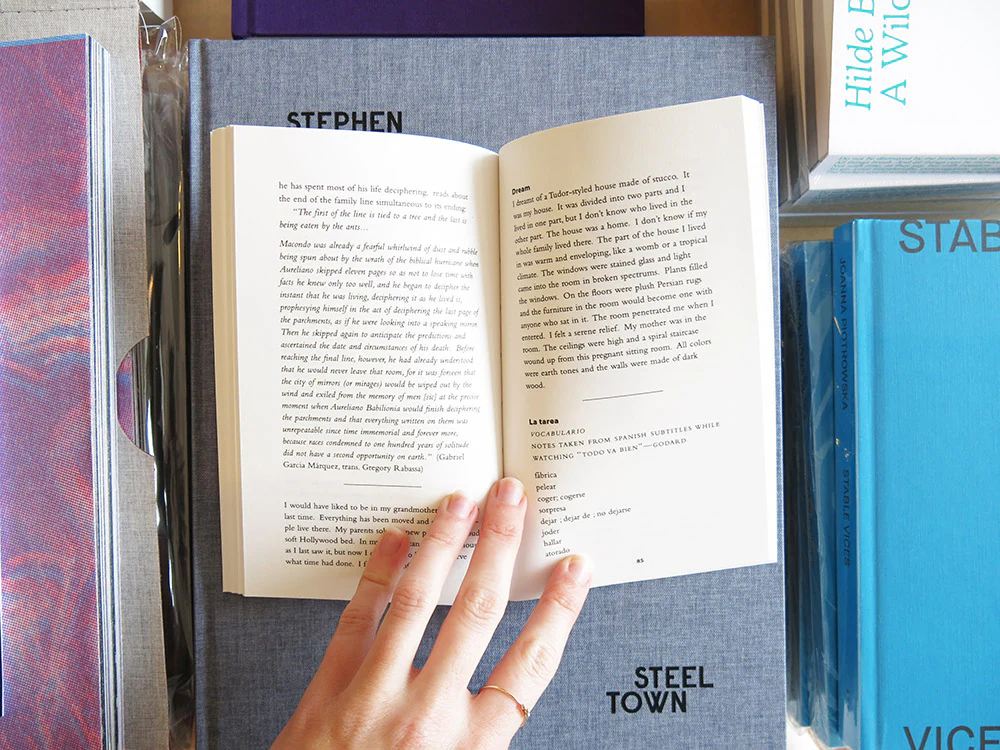
First published in 1994, Camino Road is artist Renée Green’s debut novel—a short, ruminative work infused with semantic ambiguity and the dreamy poetry of the quotidian. Republished here in a facsimile edition, the book ostensibly traces its protagonist Lyn’s journeys to Mexico and her return to attend art school in 1980s New York, but what emerges is more an intertextual assemblage of the moments between drives, dreams, and consciousness. Lyn does her Spanish homework and makes note to read Anna Kavan and Cortázar; she watches Fellini; she dreams about the Mediterranean Sea. Much like Green’s multimedia installations encompassing the sonic, spatial, and visual, Camino Road is richly layered—part intellectual genealogy, part fictional personal memory, and part cultural criticism.
Green has described the book as a 'self-conscious homage to or parody of the ‘road novel,’ ‘bohemia,’ and artist-rebels.' 'I’d been thinking about the beat generation, figures like Jack Kerouac, Burroughs, etc.—the mythic construction of the artist personality as rebel and how females, and myself in particular, entered into that,' she said. 'These ‘beat’ sources seemed to form a typical American introduction to the idea of bohemia and of being an artist.'
120 pages, 10 x 18cm, softcover, Primary Information (New York).
Green has described the book as a 'self-conscious homage to or parody of the ‘road novel,’ ‘bohemia,’ and artist-rebels.' 'I’d been thinking about the beat generation, figures like Jack Kerouac, Burroughs, etc.—the mythic construction of the artist personality as rebel and how females, and myself in particular, entered into that,' she said. 'These ‘beat’ sources seemed to form a typical American introduction to the idea of bohemia and of being an artist.'
120 pages, 10 x 18cm, softcover, Primary Information (New York).
$15.99
Renée Green – Camino Road—
$15.99
More Images
Renée Green – Camino Road
First published in 1994, Camino Road is artist Renée Green’s debut novel—a short, ruminative work infused with semantic ambiguity and the dreamy poetry of the quotidian. Republished here in a facsimile edition, the book ostensibly traces its protagonist Lyn’s journeys to Mexico and her return to attend art school in 1980s New York, but what emerges is more an intertextual assemblage of the moments between drives, dreams, and consciousness. Lyn does her Spanish homework and makes note to read Anna Kavan and Cortázar; she watches Fellini; she dreams about the Mediterranean Sea. Much like Green’s multimedia installations encompassing the sonic, spatial, and visual, Camino Road is richly layered—part intellectual genealogy, part fictional personal memory, and part cultural criticism.
Green has described the book as a 'self-conscious homage to or parody of the ‘road novel,’ ‘bohemia,’ and artist-rebels.' 'I’d been thinking about the beat generation, figures like Jack Kerouac, Burroughs, etc.—the mythic construction of the artist personality as rebel and how females, and myself in particular, entered into that,' she said. 'These ‘beat’ sources seemed to form a typical American introduction to the idea of bohemia and of being an artist.'
120 pages, 10 x 18cm, softcover, Primary Information (New York).
Green has described the book as a 'self-conscious homage to or parody of the ‘road novel,’ ‘bohemia,’ and artist-rebels.' 'I’d been thinking about the beat generation, figures like Jack Kerouac, Burroughs, etc.—the mythic construction of the artist personality as rebel and how females, and myself in particular, entered into that,' she said. 'These ‘beat’ sources seemed to form a typical American introduction to the idea of bohemia and of being an artist.'
120 pages, 10 x 18cm, softcover, Primary Information (New York).
Product Information
Product Information
Shipping & Returns
Shipping & Returns
Description
First published in 1994, Camino Road is artist Renée Green’s debut novel—a short, ruminative work infused with semantic ambiguity and the dreamy poetry of the quotidian. Republished here in a facsimile edition, the book ostensibly traces its protagonist Lyn’s journeys to Mexico and her return to attend art school in 1980s New York, but what emerges is more an intertextual assemblage of the moments between drives, dreams, and consciousness. Lyn does her Spanish homework and makes note to read Anna Kavan and Cortázar; she watches Fellini; she dreams about the Mediterranean Sea. Much like Green’s multimedia installations encompassing the sonic, spatial, and visual, Camino Road is richly layered—part intellectual genealogy, part fictional personal memory, and part cultural criticism.
Green has described the book as a 'self-conscious homage to or parody of the ‘road novel,’ ‘bohemia,’ and artist-rebels.' 'I’d been thinking about the beat generation, figures like Jack Kerouac, Burroughs, etc.—the mythic construction of the artist personality as rebel and how females, and myself in particular, entered into that,' she said. 'These ‘beat’ sources seemed to form a typical American introduction to the idea of bohemia and of being an artist.'
120 pages, 10 x 18cm, softcover, Primary Information (New York).
Green has described the book as a 'self-conscious homage to or parody of the ‘road novel,’ ‘bohemia,’ and artist-rebels.' 'I’d been thinking about the beat generation, figures like Jack Kerouac, Burroughs, etc.—the mythic construction of the artist personality as rebel and how females, and myself in particular, entered into that,' she said. 'These ‘beat’ sources seemed to form a typical American introduction to the idea of bohemia and of being an artist.'
120 pages, 10 x 18cm, softcover, Primary Information (New York).